
Organizers Share Takeaways from AI Conference: ‘A Major Success’


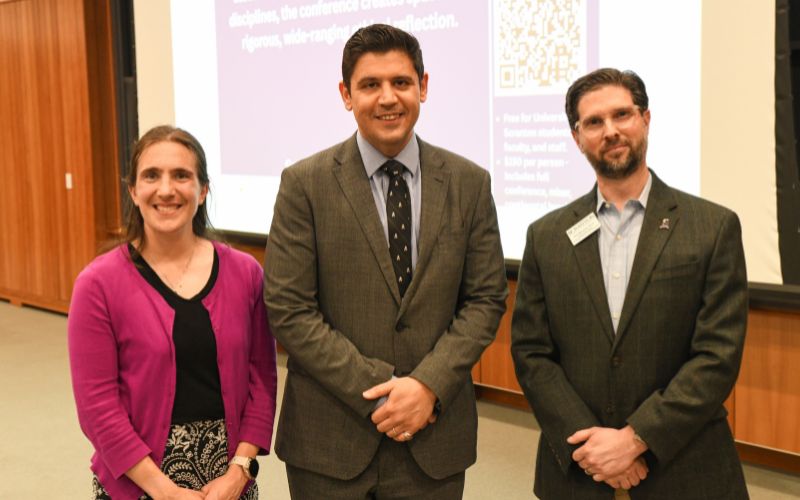
 The University of Scranton, from April 16-18, held an AI-themed national interdisciplinary conference. The conference, Confronting the Ethics of Artificial Intelligence, featured a wide array of perspectives from scholars and topical experts. From left: Megan Heeder, Ph.D., assistant professor of theology and religious studies and conference co-planner; George Aulisio, Ph.D., dean of the Weinberg Memorial Library and conference co-planner; Joe Vukov, Loyola University Chicago associate professor and conference keynote speaker; Daniel Marenda, Ph.D., associate dean of the College of Arts and Sciences; and Tracy M. Stewart, interim senior provost and vice president for academic affairs.
The University of Scranton recently brought together more than 100 professionals from 18 U.S. states and overseas, discussing artificial intelligence and presenting topical research.
AI presents both significant promise and real challenges, engaging a wide range of perspectives that were covered at the University’s first AI-themed interdisciplinary conference, Confronting the Ethics of Artificial Intelligence, held April 16-18.
Despite the countless points of view and interpretations about AI, however, common ground at the conference was found in the conscientious approach scholars have taken toward the technology and the unanimous agreement that it is here to stay.
“Our responsibility now is to determine how to live with it in ways that won’t diminish human lives and instead will promote the common good,” said George Aulisio, Ph.D., dean of the Weinberg Memorial Library. “I can think of no place more fitting than The University of Scranton to bring together scholars committed to exploring the ethical dimensions of a technology already shaping people’s lives.”
Dr. Aulisio was one of the event’s co-planners, along with Megan Heeder, Ph.D., assistant professor of theology and religious studies, and Daniel Marenda, Ph.D., associate dean of the College of Arts and Sciences.
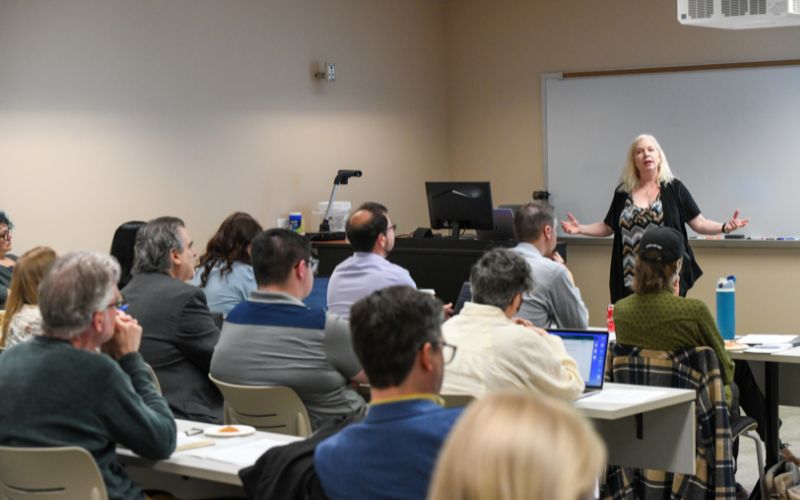
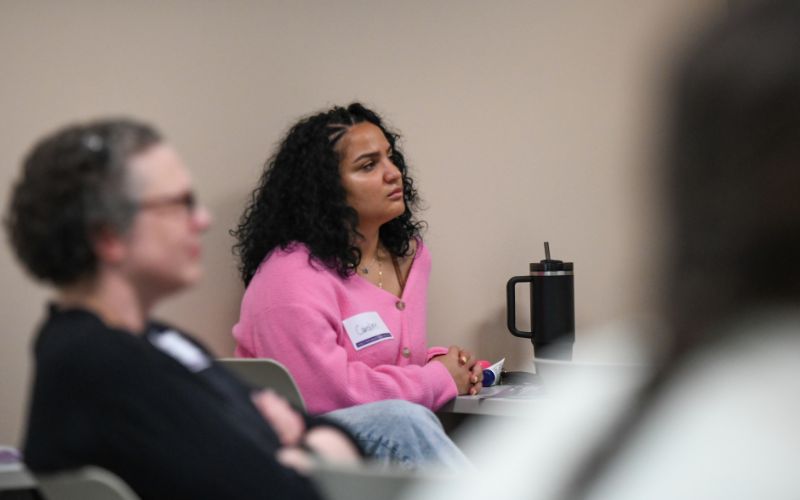
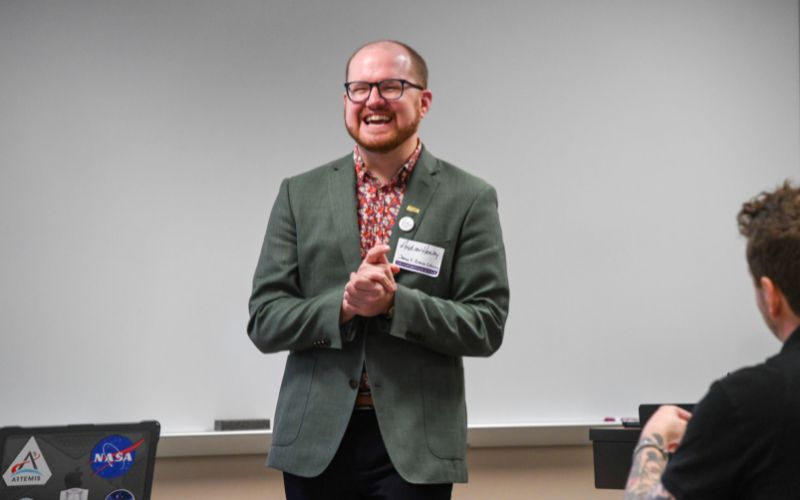
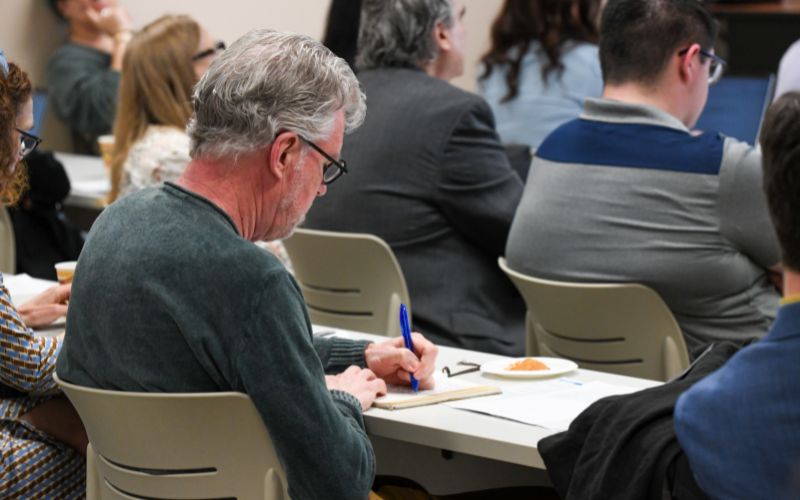
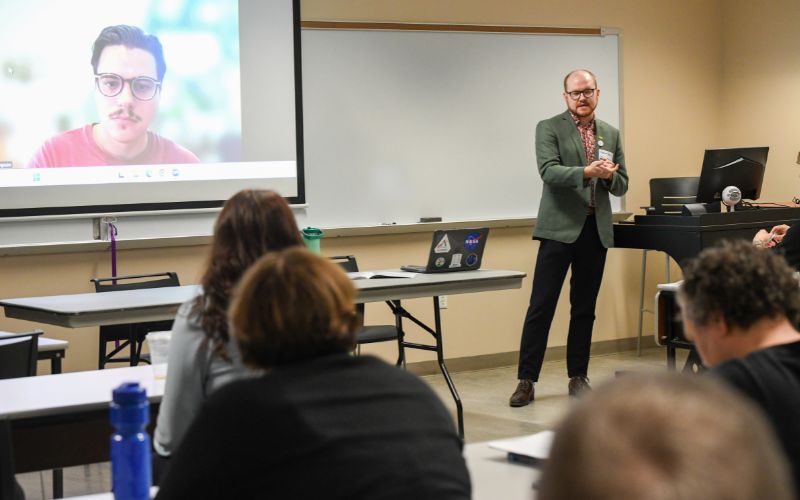
“The conference was a major success,” Dr. Aulisio said. “One aspect of the conference that I particularly appreciated was its intentional interdisciplinarity. Having voices from the humanities, health sciences, business, libraries and the sciences brought a remarkable range of perspectives, each adding from its own area of expertise.”
Guests and participants considered AI's capabilities and its appropriate uses.
"We encountered a diverse range of perspectives from many disciplines on how to evaluate when to use AI in recognition of its dire environmental and human impact, as well as its expansive possibilities. AI skeptics conversed with AI enthusiasts throughout the conference, exploring not just what AI can do, but what it should do," Dr. Heeder said. "Our exceptional keynote speakers — Joe Vukov, from Loyola-Chicago’s Hank Center, and Paul Scherz, from the University of Notre Dame — shared their respective expert perspectives on how to understand human and post-human realities as an evaluative lens to guide our engagement with the world around us and how Alasdair MacIntyre‘s philosophy of social practices serves as tool to understand how AI might enhance or augment ways of engaging and working together. One of the great gifts of the conference was seeing new relationships flourish and hearing participants express the way in which the conference responded to a need in their professional and personal development."
The conference was sponsored by the Diocese of Scranton and Geisinger with support from the University’s Ethics Across the Curriculum initiative.