


Scranton’s RSA Scholars Support Critical Needs: ‘More Than Just a Good Education’


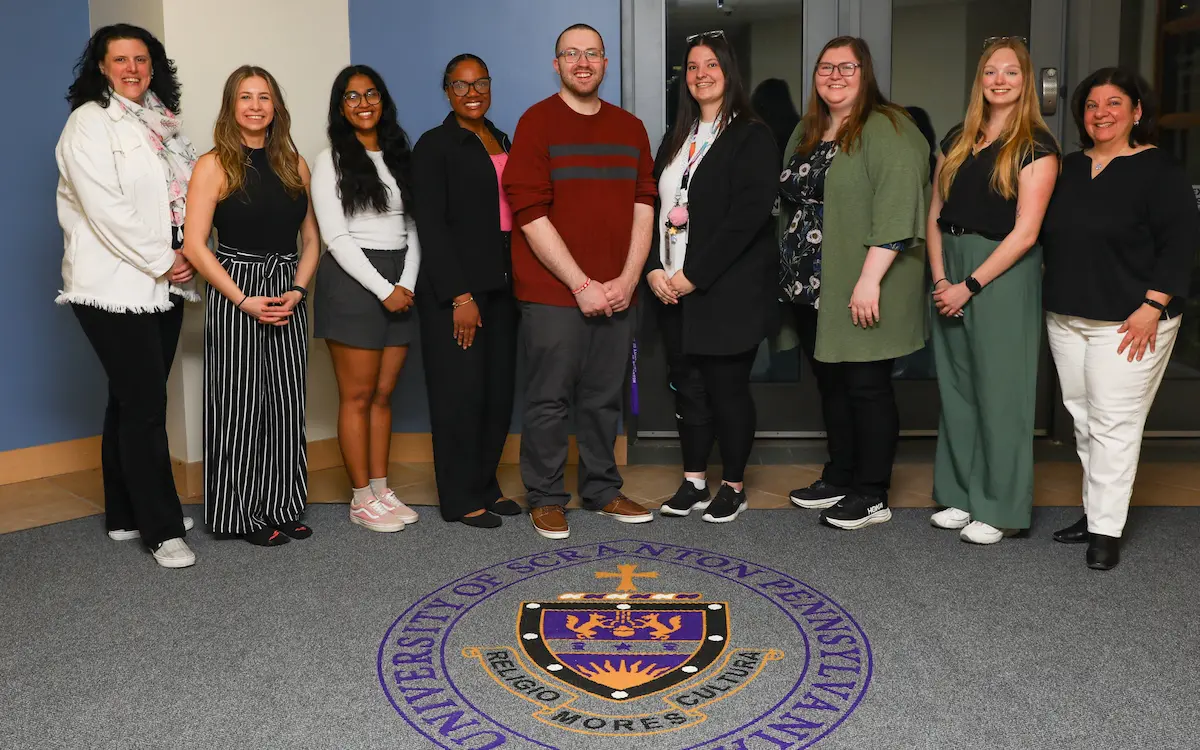
 The University of Scranton’s Clinical Rehabilitation Counseling program is supported in part by a nearly $1 million grant by the U.S. Department of Education’s Rehabilitation Services Administration. Pictured is the first cohort of RSA Scholars in the Master of Science in Clinical Rehabilitation Counseling program. From left: Sarah Soos, Kristann Mohar, Symone Donnay, Aaron Redis, Cassandra Dierolf, Mia Sandy and Skylar Okun. Absent from the photo is Alice Montes.
As is the case in every professional field, clinical rehabilitation counselors come from various backgrounds.
Aaron Redis, for instance, saw the vocation as an opportunity to combine his interests in advocacy, psychology and social justice. Cassandra Dierolf’s choice to pursue the profession was informed by her personal experience navigating life with perceived limitations. And for Mia Sandy, a year of service work reinforced her decision to return to school as a graduate student.
While Redis, Dierolf, Sandy and their classmates entered the clinical rehabilitation counseling profession for different reasons, they each answered the call and will leave The University of Scranton dedicated to the same goal of helping others achieve independence and become the best version of themselves despite disabilities or chronic health conditions.
It’s only fitting that clinical rehabilitation counseling is one of the most historic, highest-achieving and federally supported programs at Scranton, which prides itself on Jesuit values such as cura personalis (care for the whole person).
“The University of Scranton brings attention to the importance of taking care of each client’s mind, body and spirit,” said Redis, a Bloomsburg native who earned a bachelor’s degree in psychology from Southern New Hampshire University and a master’s in organizational leadership from the University of Maine at Presque Isle. “Because this perspective resonates with me, I am aware that a client’s psychological state, social support network, physical health and career objectives must all be taken into account in order to provide effective counseling.”
Therein lies the unique distinction about clinical rehabilitation counselors. They go beyond helping clients work through emotional or psychological challenges and are trained to address a client’s social, physical and other barriers that may stand in the way of a full and independent life.
“The inherent focus on commitment to social inclusion, holism, autonomy and resilience are all things that we need more of in society today,” Redis said.
A five-year, nearly $1 million grant ($999,909.16, to be exact) is helping Scranton train the next generation of clinical rehabilitation counselors. Announced earlier this year in partnership with the U.S. Department of Education’s Rehabilitation Services Administration and U.S. Rep. Rob Bresnahan ’12, the grant provides funding for student scholarships and expansion of program access by adding a fully online version of the program, directed by Samantha Herrick, Ph.D., as it seeks to address workforce shortages.
The need for highly qualified rehabilitation counselors is significant, as is their impact.
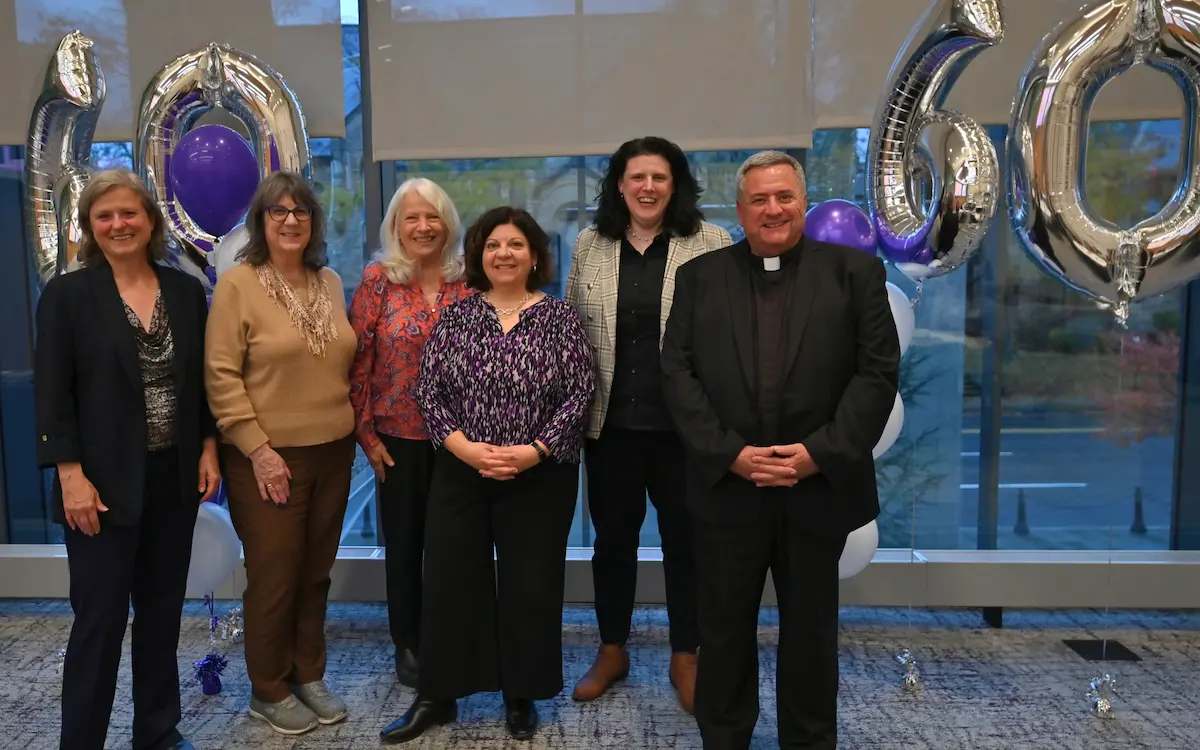
Scranton’s clinical rehabilitation counseling program recently celebrated its 60-year anniversary, a span during which its graduates have served at least 1.5 million people with disabilities. Research shows that state vocational rehabilitation professionals with a master’s in rehabilitation counseling are also more likely to help clients achieve successful outcomes more quickly and with fewer state and federal resources, as opposed to professionals who hold other degrees.
 Dierolf, of Larksville, understands better than most the impact that can be made with proper resources and a supportive team.
Diagnosed with autism at three years old, Dierolf was told by professionals that she may never drive nor live independently.
“I got my driver’s license at 16 and have built an independent life while pursuing a meaningful and fulfilling career path,” she said.
While Dierolf kept her diagnosis private for many years, she has openly shared her story in hopes that it inspires others to embrace their identities. This, she believes, will help with treating clients — and it already aided her in other opportunities, such as serving as a job coach and direct support professional for adults with intellectual disabilities at PA Inclusive.
A graduate of Penn State Wilkes-Barre, Dierolf has made the most of her time at Scranton by getting involved with the Performance Music program and earning induction into Chi Delta Rho, the counseling honor society, among other things.
“Each experience has reinforced my commitment to advocacy, accessibility and empowering individuals with disabilities to reach their full potential,” Dierolf said.
Unlike Redis and Dierolf, Sandy completed her undergraduate studies at Scranton. She says she was “forever changed” while pursuing her degree in counseling and human services — and not only because of her coursework and mentors but because of a foundational experience with First-years Involved in Reflective Service Together (FIRST), a weeklong volunteer program that allows students to get involved in the community and see the impact they can make.
After graduating from Scranton in 2023, Sandy, a Scranton native, took a gap year to complete a service experience as an AmeriCorps member at Maggie’s Place in Phoenix, Arizona.
She returned to Scranton in 2024, prepared and inspired to follow another Jesuit ideal of “walking for and with others.”
“We are taught from the beginning of the program that anyone, at any time, can be diagnosed with a disability or acquire one,” Sandy said. “This career path became my passion, but like many counselors, I struggled with impostor syndrome and worrying about working with clients who may have very different life experiences compared to my own. …
“My experience at Maggie’s Place was fundamental in my choice to return to Scranton. I was surrounded by so many individuals with very different life experiences, and at the core of it all, I was relying on my rehabilitation background to support them.”
Sandy, who completed her graduate studies this past spring and was immediately hired by the Pennsylvania Bureau of Blind and Visual Services in Wilkes-Barre, shares fond recollections of the fourth floor of McGurrin Hall, where she was pushed to learn and acquire the skills and tools that she now shares with clients.
 For Sandy, though, those classrooms, hallways and peers represent something even deeper, having suffered the unexpected death in November of her father. She leaned on her clinical rehabilitation counseling community to get through her toughest times, including stepping up to become the legal guardian for her two teenage siblings.
“Many people would offer guidance and share their experiences, which healed me in so many ways,” Sandy said. “It is something I will never, ever forget and something that I will always carry with me. I never felt alone, and there is nothing more important to me than making sure whoever I work with has the same experience. …
“We, as students, get a lot more from this program than just a good education. We get to understand the commitment of showing up for ourselves, our clients and most importantly each other.”