Third Annual World Languages Day: “Make Yourself More (Interesting Than AI)”


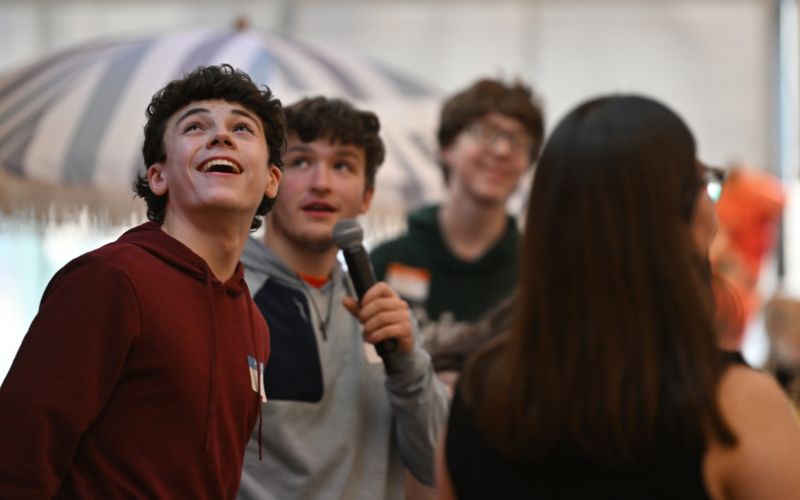
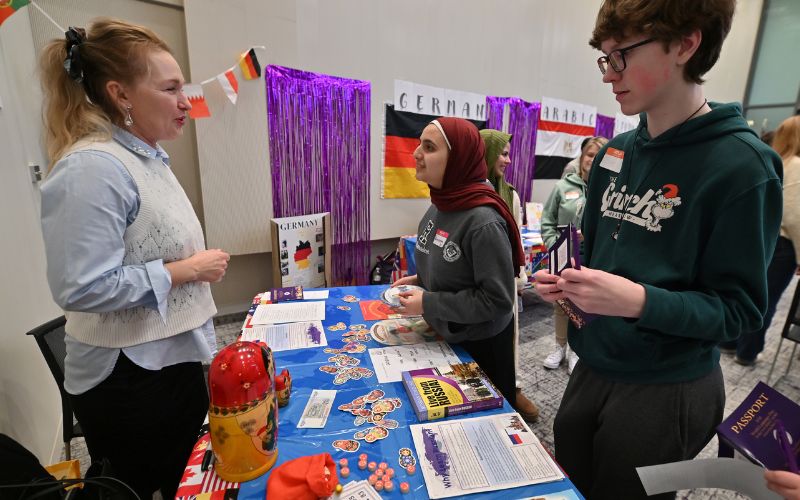
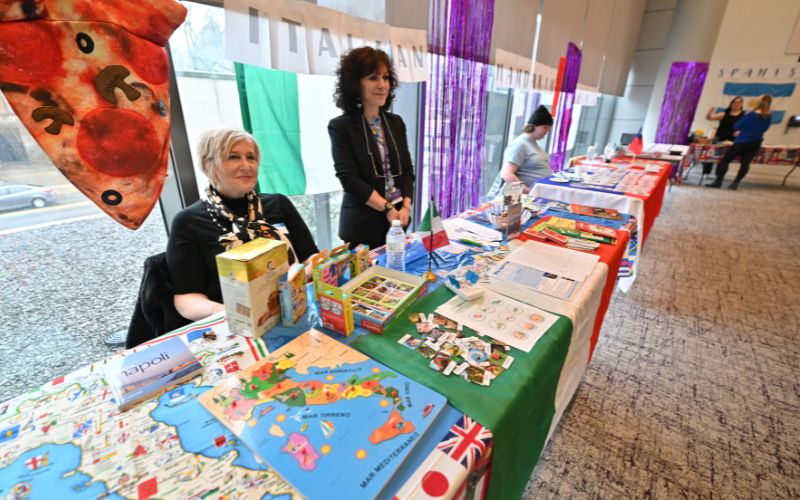
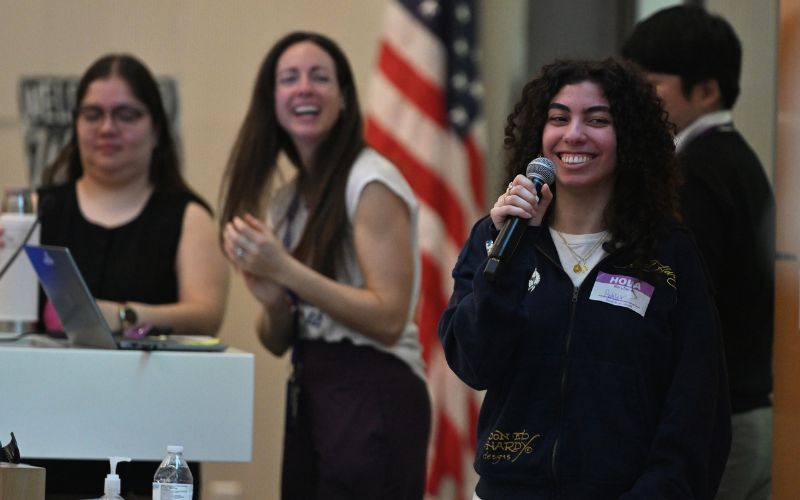
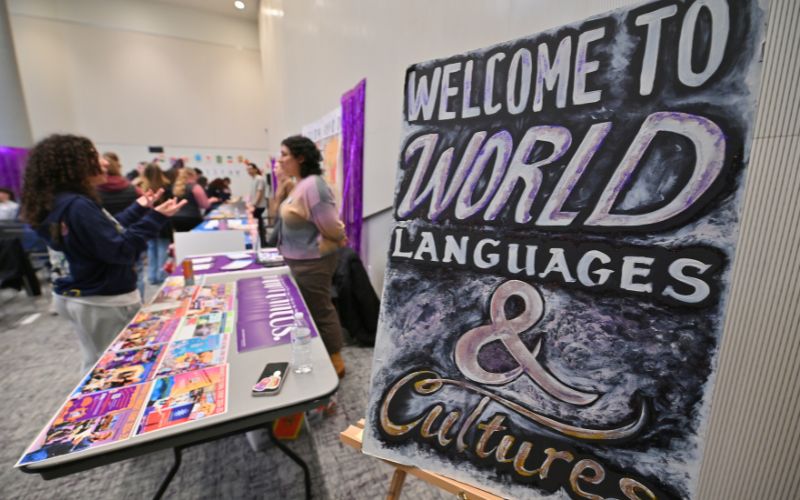
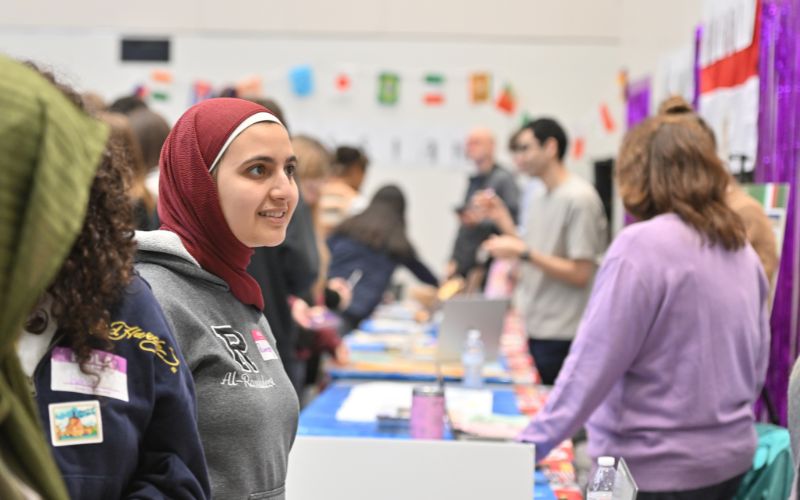
 Over 200 University students, staff, faculty, and members of the wider community came out to support The University of Scranton’s 3rd Annual World Languages Day in the Kane Forum this year. As participants visited different tables and engaged in various language lessons, organizers conveyed that in an age of seemingly effortless automatic translation tools, language learning efforts still set individuals apart while bringing them genuinely together.
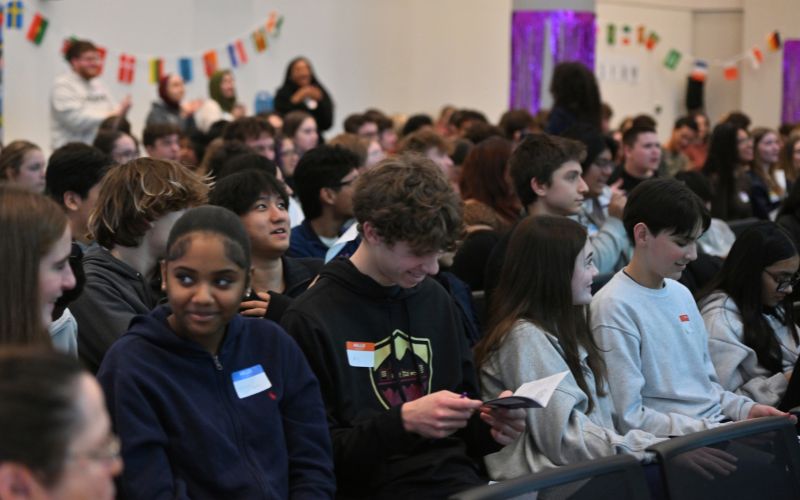
The Department of World Languages and Cultures welcomed over 200 guests for the 2026 Annual World Languages Day on March 5 at The University of Scranton, providing students, faculty, staff and language students and teachers from local high schools with a unique and unforgettable program.
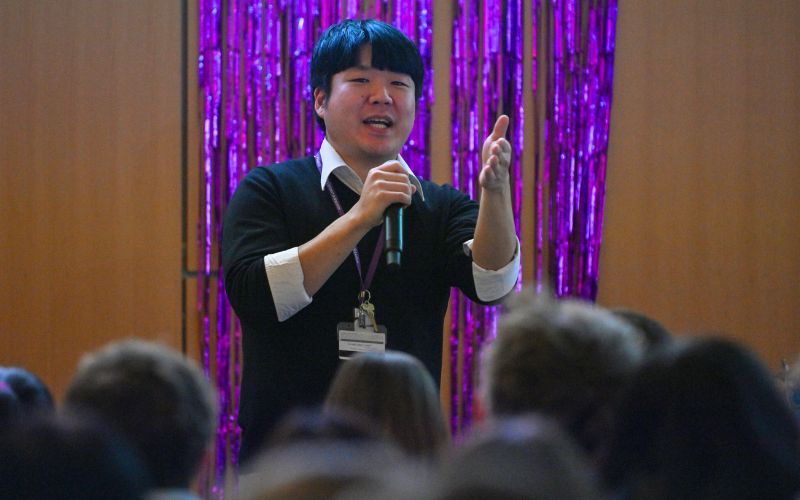
More than 150 students from 10 local high schools joined dozens more from the University to hear a message about the value of World Languages. Interactive presentations were delivered in six languages. Participants engaged with World Languages instructors during break-out sessions featuring American Sign Language (ASL), Arabic, French, German, Italian, Japanese, Mandarin, Russian and Spanish. College of Arts and Sciences Dean Dr. Carolyn Barry welcomed a packed room.
The theme of this year’s World Languages Day: “Make Yourself More (interesting than AI). Dr. Amy Kuiken, Coordinator of the Language Learning Center at the University, explained that “we find ourselves once again living through an era when humans need to think about how to set ourselves apart from emerging technology when it threatens to do all the things we can do.”
Dr. Kuiken said AI-driven translation apps can now “handle everything from grammar and vocabulary to the trickier things related to tone and style. … Where we used to have to, in some cases, agonize over the best way to say something…we go straight to a translator that can increasingly handle more and more of that for us. But I think it’s important to keep in mind that if we’re outsourcing everything to an AI, we’re already replaceable by an AI.”
Kuiken maintained that those who do learn a language are investing in themselves: “Now you’re noticing cultural, linguistic, psychological, historical, social patterns, rules, alternatives, mechanics, properties…You see the matrix. This is how you grow and make yourself more interesting than AI.”
Kuiken appealed to those “who may be thinking that language learning might be one of the first things to go in an AI age” by sharing a personal story about how language learning “can set people apart while bringing people together.” Using social media, she unintentionally befriended a community leader in Tanzania after responding to a call to help translate for local French-speaking families in Scranton. This led to an international educational partnership that benefits hundreds of students today.
“We have an ever-evolving sense of what language is. People are starting to recognize that language is much more than translation, vocabulary and grammar. It’s about context, creativity, strategy, identity and community,” Kuiken said.
Dr. Yamile Silva, Chair of the Department of World Languages and Cultures, put it powerfully: “From the very first cry of a newborn to the last words whispered by an elder, language accompanies every moment of our lives. It is how we express love, resolve conflict, pass down wisdom, tell stories and make sense of a world that is often complex and uncertain. Language is not simply a tool for communication — it is the very fabric of who we are.”
Silva pointed out that “the study of world languages and cultures is not a luxury…It is one of the most urgent and practical investments a young person can make in their future — and one of the most meaningful contributions a university can make to the world…When you learn another language, you do not simply gain a new set of vocabulary words or grammar rules. You gain access to an entirely different way of thinking…You realize that the world is wider, and richer than you ever imagined…in that realization, something profound happens — you become a better thinker, a more empathetic human being, and a more effective citizen of the world.
Silva said, “Here at The University of Scranton, we take that mission seriously. Our Department of World Languages is not simply a place where conjugations are memorized and textbooks are studied…Our students take those lessons beyond the classroom — into study abroad programs, community engagement, research and careers that make a difference in the lives of others.
“Today's celebration is a testament to that commitment. It is a reminder of why we do what we do.”
Special Thanks to WLC Instructors Who Contributed to the Event:
Mandarin Chinese - Professor Chih-Yi Wu, Taiwanese Government Chinese language instructor
Spanish – Professor Agustina Santivañez, Spanish language Fulbright Teaching Assistant from Argentina
Japanese – Professor Kazumasa Fujita, ALLEX Foundation Japanese language instructor
German – Professor Eva Grohs, German language Fulbright Teaching Assistant from Germany
Arabic - Professor Mohamed El Ghanam, Arabic language Fulbright Teaching Assistant from Egypt
Italian – Professor Franca Kelly, University of Scranton adjunct professor of Italian
American Sign Language (ASL) – Professor MaryAnn Stefko, University of Scranton adjunct professor of ASL
Russian – Professor Anastasia Maume, University of Scranton adjunct professor of Russian
French and General Linguistics – Dr. Amy Kuiken, Language Learning Center coordinator
With support from the World Languages and Cultures full-time faculty:
Dr. Yamile Silva, chair of the Department of World Languages and Cultures
Dr. Marzia Caporale
Dr. Virginia Picchietti
Dr. Habib Zanzana
Local High Schools Attending the Event:
Dallas
Honesdale
Lakeland
Old Forge
Riverside H
Scranton
Valley View
Wallenpaupack
Western Wayne
West Scranton